Skip to content


Showing 1–8 of 34 results



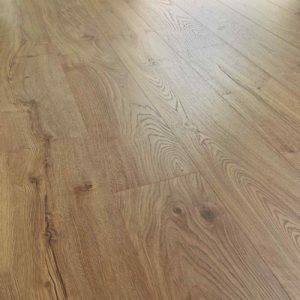


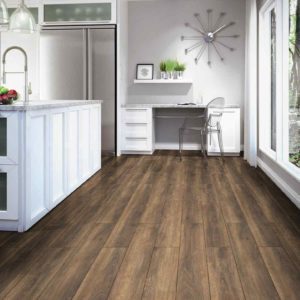
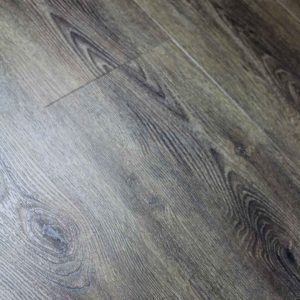

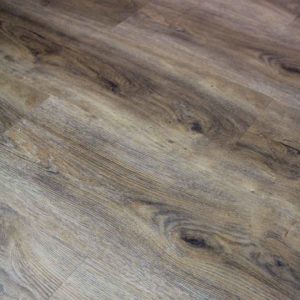
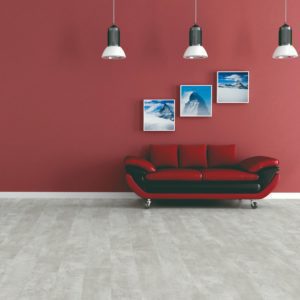
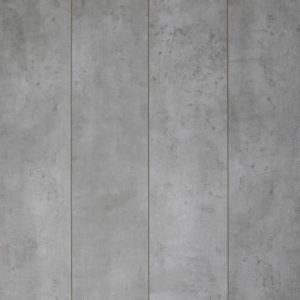



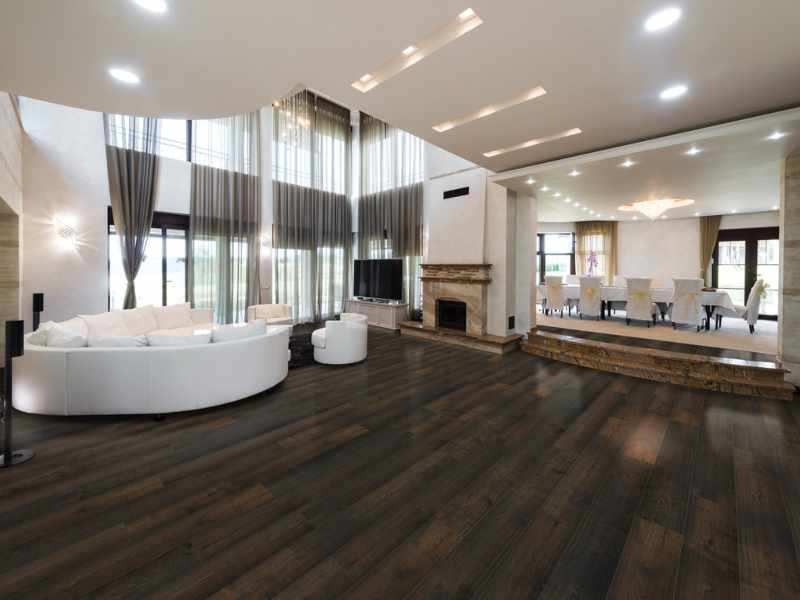





What is water resistant laminate flooring?
Traditional laminate floors are known for not being very water-friendly, as they can swell and sustain irreparable damage. However, laminate flooring has evolved in its manufacturing to offer increased water resistance, achieved through three fundamental aspects that contribute to making these improvements in these floors.
1) Surface: A water-repellent seal is applied to the surface, allowing it to resist spills and moisture for longer periods.
2) Board interlocking: The interlocking mechanism of the laminate flooring is made tighter to reduce water infiltration between the pieces.
3) Core: Adjustments are made to the core where high-density fiber is mixed with resins to enhance water resistance.
Composition of water resistant laminate floors
Manufacturers can guarantee water-resistant laminate floors through this approach, without sacrificing advantages like their nearly realistic wood appearance and the variety of designs characteristic of laminate floors. Additionally, their construction involves layers, as described below:
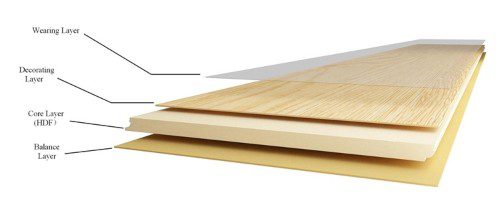
- Top Layer: This protective layer covers the floor, guarding against scratches and stains. In laminate flooring, this layer features a waterproof seal that prevents water from seeping through.
- Design Layer: This layer includes a photographic film of the flooring design, providing a natural appearance to the surface of the water-resistant laminate floor, whether it’s wood, stone, or ceramic.
- Core Layer: With the aforementioned core improvements, this layer provides stability and water impermeability to the floor. Due to the increased resin content mixed with high-density fiber, it swells less than traditional laminate.
- Backing Layer: Serving as the lower layer of the floor, it contributes to stability and also features a waterproof seal, making the board resistant to water from both the top and bottom.
Abrassion class (AC) rating
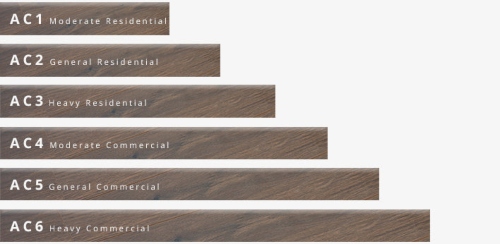
All quality laminate floors must undergo the ‘Taber test,’ which provides the AC rating classification. Through these tests, the floor’s resistance to impact, stains, and abrasion is measured. It employs a scale from 1 to 6, meaning the floor can be classified as AC1 to AC6. Regardless of the classification, they are all high-quality floors; otherwise, they wouldn’t receive any classification at all.
Based on the AC rating, the uses for laminate flooring are determined. Accordingly, an AC1 and AC2 rating indicates suitability for residential spaces with moderate traffic. An AC3 rating can be used in both high-traffic residential and moderate-traffic commercial spaces. On the other hand, AC4 and AC5 ratings are intended for heavy-traffic commercial spaces like offices or hallways. Finally, the recent AC6 rating is utilized in high-traffic areas such as mall corridors, demanding a high level of abrasion resistance.
- Residential Use (Moderate): AC1, AC2 & AC3.
- Commercial Use (Heavy): AC4, AC5 & AC6.
How to install water resistant laminate flooring?
Let’s remember that water-resistant laminate floors come with the advantages of traditional laminate flooring. This is why they’re very easy to install, making them the perfect DIY project. The most common installation method is the well-known click-lock system, where you simply fit the pieces together, click, and your floating floor will be ready to use.
The steps for installing water resistant laminate floors are quite straightforward. Here’s a brief step-by-step guide for the process, considering even the smallest detail:
Step 1 – Material acclimatization
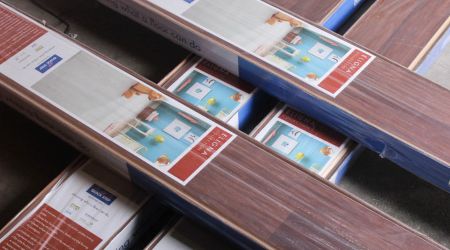
First and foremost, the pieces need to acclimate to the room’s temperature. Leave them for at least 72 hours before installation. We recommend mixing pieces from different boxes to enhance the design, and you can design while your pieces acclimate.
Step 2 – Floor preparation
Similarly, the floor where the laminate is going to be installed needs to be cleaned and prepped. It’s important to have a smooth surface in this step to avoid issues after installation.
Step 3 – Installation of the first row
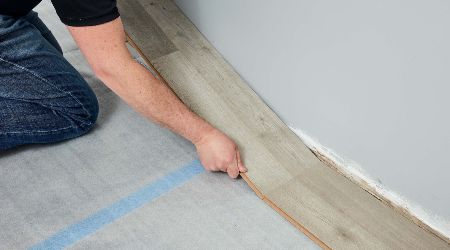
Next, proceed with installing the first row of your floor, starting from the longest wall. Always place spacers along the wall to achieve a perfect installation. Begin with the first piece in a corner, then place the second piece, joining it to the first on the shorter side. Click the pieces together and continue this process with the necessary pieces.
To finish the first row, you’ll need to cut a piece to fit. You can use a hand shear or a jigsaw for this. When measuring, consider the expansion gap for the floor and click the piece with the previous one to complete the first row.
Step 4 – Installation of subsequent rows
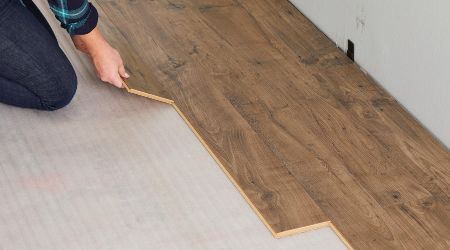
Begin the next row with a shorter piece to create an offset, ensuring greater stability for the floor. Connect the first piece to the second on the longer side. For the second piece of this row, connect it to the first piece and the previous row, using the click-lock system for seamless assembly.
Step 5 – Final details
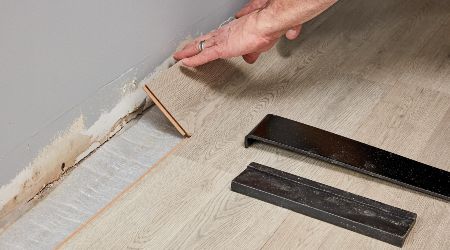
For the last row, you’ll need to cut the pieces to fit. Additionally, while installing the last row, make sure to install transition pieces and baseboards to complete the installation and provide a polished finishing touch to your project.”
How to clean water resistant laminate flooring?
Just like installation, cleaning this kind of material is an easy task. To clean and maintain it, you only need a soft-bristle broom, a damp mop, and a vacuum.

Step 1 – General Cleaning
Start with dry cleaning using the broom regularly, which can be done daily or at least every three days. Enhance the cleaning process with a vacuum to reach difficult spots and keep the floor free from dirt and sand, as these materials can scratch your floor.
Step 2 – Deep Cleaning
Occasionally, you can perform a deeper clean with a damp mop, perhaps on a weekly basis. It’s crucial that the mop is slightly damp, not completely wet, to avoid damaging the floor.
Step 3 – Choosing the Right Products
The choice of cleaning products is up to you, but we recommend using specialized products for laminate floors. Alternatively, you can create a mixture of warm water and vinegar to maintain your floors. If you prefer a pleasant fragrance, opt for specialized products.
Pros and cons of water resistant laminate flooring
When choosing flooring for your home, you have a multitude of options available in the current market. That’s why it’s important to be aware of the advantages and disadvantages of each type of flooring. Here, we’ll present the main pros and cons related to water-resistant laminate floors.
What are the advantages of water-resistant laminate flooring?
- Water resistance: The primary advantage of these floors is that their manufacturing allows them to resist water for longer periods, preventing damage to the floor due to spills, making them suitable for kitchens and bathrooms.
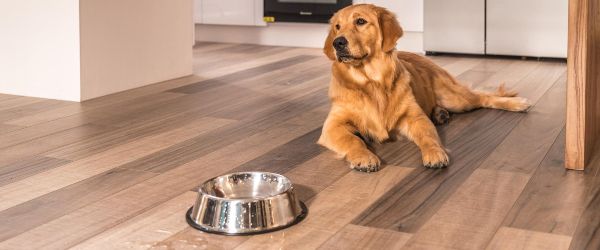
- Durability: Thanks to the composition of each layer, these floors are very strong and long-lasting, capable of withstanding high traffic. They are ideal for homes with children or pets.
- Installation: The installation of water-resistant laminate flooring is very straightforward with the click-lock or snap-lock system. It doesn’t require a high level of skill, making it ideal for DIY projects.
- Realistic design: Laminate flooring closely mimics real wood and can be created in various styles and wood types. This is why it’s one of the most sought-after options in the market.
What are the disadvantages of water-resistant laminate flooring?
- Impermeability: While these floors are more water-resistant than conventional laminate floors, they are not entirely waterproof. They cannot withstand high levels of stagnant water. Additionally, resistance to water from underneath can be problematic in areas with high humidity levels.
- Acoustics: If the floor installation is not done well, hollow sounds can be generated, which is not very pleasant in household spaces.
Frequently asked questions
Here are the answers to the most frequently asked questions about water-resistant laminate floors.
Where can I install water-resistant laminate floors?
With its water-resistant properties, these floors can be installed in any space within your home, including bedrooms, living rooms, kitchens, basements, and bathrooms. However, it’s recommended to clean up spills promptly and avoid leaving stagnant water for extended periods to prevent irreparable damage.
Does water-resistant laminate flooring require an underlayment?
These floors often come with a moisture barrier layer in the lower layers, which means they don’t require an underlayment. However, for the references that include this layer, using a moisture barrier is necessary to enhance water resistance and floor acoustics.
How do you clean water-resistant laminate floors?
To clean your floors, sweep and vacuum frequently to prevent dust and sand accumulation. Additionally, it’s crucial to address splashes or spills promptly, as they can pose a risk to your laminate floors. As a final touch, occasionally clean your floors with a slightly damp mop to maintain their appearance.
How easy is it to install water-resistant laminate floors?
They are very easy to install, making them an excellent DIY project. You just need to use the click-lock system, and you’re done. Follow the simple steps provided in this article for a perfect installation.