 Skip to content


Showing 1–8 of 17 results







What is tile flooring?
The tiles refer to a mixture of clay and water. They are generally ceramic and stone materials. Therefore, knowing how they are made is important to choose them properly.
Likewise, within the clays there are differences. The denser ones produce more durable floors. For example, those made of kaolin or those containing quartz are the most durable. They are also the most water-resistant.

Manufacturing process
In its manufacturing process, firstly, the materials are mixed. Then they go through a drying and cooking process. Second, in the baking process, the material is baked to harden it. Third, the varnish is applied that gives the material its water resistance.
According to their manufacture, tile floors have two layers. The first, the tile body or bisque. And, the second, the top layer or glaze. The bisque is the thickest layer and the glaze refers to the enamel layer.
Once the material mixture is dry. The tile is pressed into the final shape. After drying it is baked. Finally, the glazing process is carried out. In this process, the floor design is printed.
After the enamel is applied, the pieces are baked again. This is to fix the enamel to the base. The firing temperatures also influence the result. Ceramic tiles are fired at a temperature of 2000°F. While porcelain tiles are fired at a temperature of 2500°F.
Appropriate use areas
In this sense, it is important to know the types of floors. There is a rating scale from the Porcelain Enamel Institute PEI. Its classes range from 0 to 5. It is not a measure of quality. Because of that, it indicates the recommended uses of tile flooring.
PEI 2 indicates low traffic uses. On the other hand, PEI 5 is made for heavy traffic. Although aesthetic features are important. The type of uses should be considered within your choice.
Types of tile flooring
We all know about tile flooring. However, few of us know the types of tile floors and their differences. There are porcelain, ceramic, and stone tiles. Each is made of different materials and has unique properties.
Ceramic tile flooring
Its composition is made of clay, minerals, and water. First, the materials are mixed and pressed into the form of a tile. Then, they are heated in a furnace to high temperatures. Finally, some ceramic tiles are glazed which increases their impermeability.
These floors are ideal for bathrooms, kitchens, and showers. Due to their composition and treatment, they are water-resistant.

Porcelain tile flooring
If the ceramic floors are durable. Porcelain floors are extremely durable. Due to their composition with finer particles and fired at a higher temperature. The clay of this type of floor contains feldspar, kaolin, and quartz.
On the other hand, unlike ceramics, they are waterproof whether glazed or not. In addition, they have a wide variety of styles. Capable of imitating stone and ceramics.

Stone tile flooring
As their name suggests they are made of natural stone. Besides, natural stone floors have a great variety of colors and textures to choose from. Therefore, their main advantage and reason for purchase is the beauty of their design. In fact, you can find the perfect design for your home on these floors.
Its main disadvantage is maintenance. Because it is more expensive and requires more investment than ceramic and porcelain floors.

The choice of the floor type depends on the use you want to give it. Also, you should consider your budget. Because the costs of each are different.
How to install tile flooring
Installing tile floors can be a big challenge. But it’s not impossible. You just need to know the right tools and tips to do it perfectly. The right steps are preparation, tile installation, cutting, grouting, and finishing touches.
Prepare the subfloor
First, you must properly prepare the subfloor where you are going to install your floor. There are differences in the installation if the underfloor is wood or cement. Therefore, if it is wood, you must place a backing board floor. Make sure you have a flat subfloor.
On the other hand, if it is made of cement, you only have to clean it perfectly to start the installation. Then, unpack and mix the pieces from different boxes. This way you ensure a better style matching.
Second, mark the floor with a chalk line by drawing a grid about the size of your tiles. This is in order to measure the final size of the tiles and to perform the cutting of the tiles. Third, mix the base according to the manufacturer’s instructions.
Finally, keep in mind that the base. Sometimes it is a thin-bed mortar. However, manufacturers recommend a synthetic adhesive
Install and cut the tiles
After preparing the base, apply it evenly. Besides, do not forget to place spacers between your tiles. Also, consider leveling the tiles after each section. Continue the process by applying the base and locking the tiles. This way, until the room, is finished.
For the cutting process. Initially measure the difference between the last tile and the wall. Then mark the distance. Use a tile cutter to cut the material.
Grouting and finishing touches
First, you must prepare the grout. Follow the manufacturer’s instructions. Then remove the spacers and apply the grout. Smooth between the spaces. Remove as much material as possible from the tiles. Then allow the recommended drying time. Then clean the grout lines with a damp sponge. Finally, clean the surface of the tile.
For the finishing touches. Install trims, moldings, and transition pieces. You will be able to enjoy your beautiful project.
Tile flooring cleaning and maintenance
All floors require cleaning and care. Of course, tile flooring is no exception. To begin, sweep and vacuum at least twice a week. After the floor is clean, mop it using a chamois mop. Use mild detergent with hot water. You can do this every two weeks or whenever you feel it is necessary.
For best results and to avoid a dirt layer. Change the cleaning solution frequently. At the same time, keep your mop clean. Also, be careful not to use abrasive liquids.
Due to its particularity, it is important to keep the grout clean. To do this, use a commercial grout cleaner. You can also use a mild bleach solution. It is necessary to use gloves in this cleaning. Likewise, if you have difficult stains on your grout. Use a mixture of baking soda and water.
If you find blurry tiles after cleaning your floor. You probably have excess soap. In this case, use an all-purpose cleaner to clean the floor again. You can also use a mixture of lemon, vinegar, and water.
In the same way, if your floors are made of stone tiles. Avoid the use of acid mixtures. And avoid lemon. In this case, it is best to use a cleaner with a neutral PH.
Styles, shapes, and sizes
Tile flooring comes in a wide range of colors, designs, and styles. Also, they are manufactured in different shapes. Tile sizes may also vary. Therefore, we show you the options so you can choose the right one.

Styles
Within the style category, you will find the wood, stone, or print look. Each one is ideal for tastes and spaces. Below, we detail their qualities.
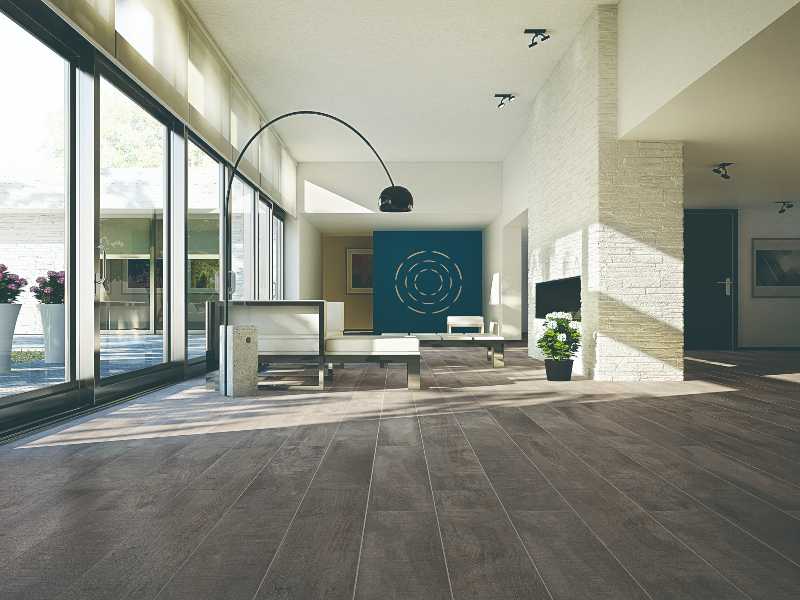
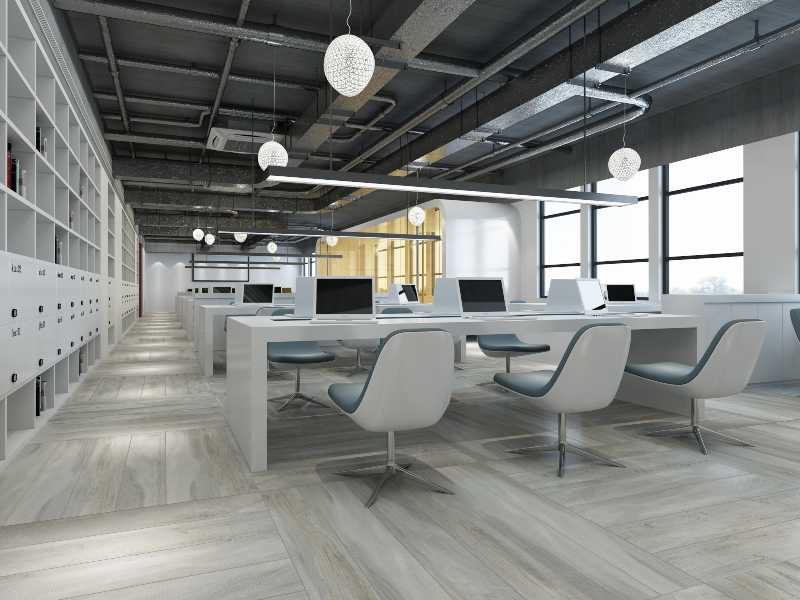
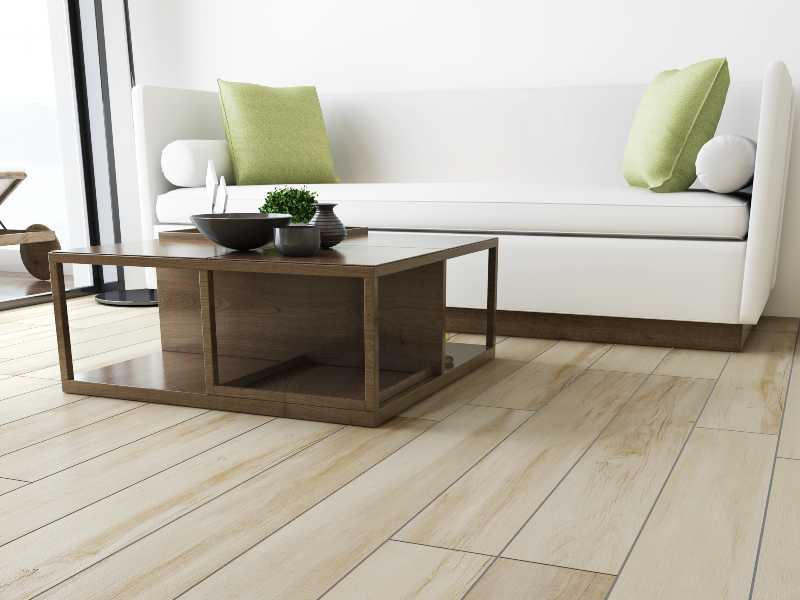
- Wood: Wood is a very popular trend. Besides, it never goes out of style. These styles imitate not only solid wood. Also hand-scraped and worn finishes. That’s why imitation wood tiles are being installed all the time. On kitchen floors and in living rooms. Because they make your home warmer and modern.
- Stone: Very popular for kitchens and bathrooms. But perfect for hallways and entrances. Stone looking tiles can imitate marble, limestone, and travertine. Marble is a clean, and classic style floor. Limestone enhances the look of rooms. And travertine gives you other styles of natural stone. The best thing about these styles is that they have a natural look. Also, they are durable and have much less maintenance. Compared to natural wood or stone.
- Patterned: If you prefer a modern style. Or you don’t like classic and natural styles at all. Then, the pattern is for you. Because tile floors offer endless possibilities for patterns. Styles with classic or art deco designs.
Shapes
The tile floors are very flexible. That’s why you’ll find square, hexagonal, and plank shapes.
- Planks: These are table-shaped tiles. With a solid wood appearance. Besides, they can have different widths. Because they adapt to trends.
- Rectangular: They are growing in popularity. So, they are installed indoors and in living rooms.
- Grid: This is the traditional and most recognized form of tile flooring. For a classic and elegant style.
- Other forms: Tile floors can be circular. There are also hexagonal, herringbone, chevron shapes. No doubt, they will continue to innovate to offer you variety with style.
Sizes
Another choice factor for your tile floors is its size.
- Large format: You can find large sizes (15” or more). Perfect for small spaces and give them more width.
- Standard format: They can also be standard size (between 2” and 12”). These can be easier to install.
- Small format: And finally, there are the small tiles (between 0.5” and 2”). These offer a different style. They are ideal for small bathrooms giving them a personal touch.
Tile flooring pros and cons
However, tile flooring has both advantages and disadvantages. Know every detail of these features. This way you will be able to choose them properly.
PROS
- Variety: Tile flooring variety is amazing. That is why you can find ceramic, porcelain, and stone. There are really beautiful options. That will look perfect in your living rooms and hallways.
- Sizes: Not only the color variety is an advantage. Also, the size and shape variety makes them unique. If you wish you can find big, standard, and small sizes.
- Durable: If durable floors are available. Those are the tile floors. Due to their manufacturing process. And particularly to its high-temperature firing. Within these, porcelain tile floors are the most resistant.
- Stylish: They are distinguished by their wood or natural stone style. In different shades and colors. And they match everything. Nothing is more elegant!
- Easy to clean: Keep your tile floors clean. It’s really simple. That’s why you don’t need any special products. Just sweep and mop properly.
- Low maintenance: Compared to other floors. You will not need to polish or refinish them. Only proper cleaning will be enough to maintain them.
- More affordable than stone: Not only at the initial cost. Also in maintenance. The investment will be rewarded.
- Increase your home’s value: The tile flooring installation is desired in the market. So, if you are planning to sell your home. The investment in tile flooring is perfect.
CONS
- Hard to Install: Installing tile floors is not that easy. Although you can still do it if you want. It is best to hire a professional.
- Hard to touch: One of the disadvantages of the tile floor is that it is not very friendly to your feet due to its hardness properties. For this reason, it is hard to touch.
- Slippery: Due to its enamel coating. These floors can become slideable.
How to choose the right tile flooring
Finally, we suggest some important facts when considering your choice of tile flooring. Be aware of uses, styles, shapes, and more.

Location
Because they have an absorption coefficient of 0.5%. They are water-resistant floors. You can use them anywhere in your home. Therefore, they are ideal for bathrooms, kitchens, and showers.
Use
It is an excellent material for kitchens, bathrooms, and entrances. Not only for its style and elegance. Also for its easy maintenance.
Style
Tile floors have unique styles. So you won’t find another floor that is so versatile and durable. There are those that imitate wood. Also natural stone. So does the travertine style. To choose the right style. Consider your personal style. As well as the current decoration of your space.
Size
The size of the tile is an important factor to consider. Large sizes give space and width to your spaces. Small sizes can give you a unique style.
Type
Porcelain tiles are the most resistant. That’s why they are ideal for durability. If you want to remodel your home. You will probably prefer a more durable material. However, if you are going to install tile on walls, heavy material is not your best option.
Congratulations. You are now an expert in tile floors. In fact, you already have enough information for a perfect choice. For more details, contact our customer service by mail or whastapp.


